


When Survival Becomes Your Identity

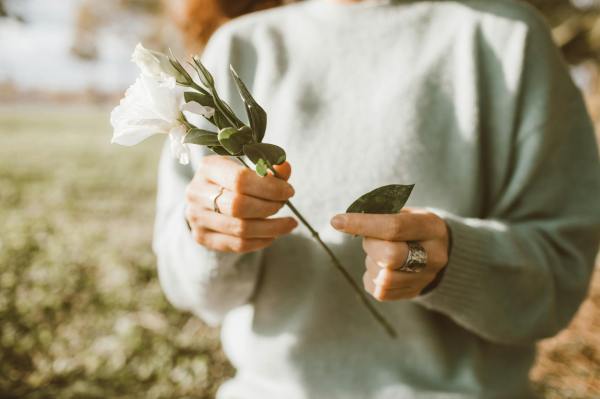
Photo by Tobias Aeppli on Pexels.com

Learning to Receive After a Lifetime of Rebuilding

Have you ever noticed that some of the strongest people are also the most exhausted?

Not because they aren’t capable. Not because they aren’t resilient.

But because they’ve spent years—sometimes decades—carrying the weight of survival.

Recently, I found myself reflecting on a question many spiritual seekers wrestle with:

How do you trust when life has repeatedly shown you that everything can change in an instant?

It’s a beautiful question because it challenges one of the most common messages in the spiritual world: Just trust. For some people, trust feels natural. For others, trust feels impossible.

Not because they lack faith, but because they have lived through loss, disappointment, heartbreak, financial struggles, health crises, and unexpected detours. They know firsthand how quickly life can change.

If you’ve spent most of your life rebuilding, “just trust” may feel less like wisdom and more like an impossible assignment.

The Hidden Identity of the Survivor

  • Many of us wear resilience as a badge of honor.
  • We’ve survived difficult relationships.
  • We’ve navigated financial hardships.
  • We’ve overcome obstacles that others never see.
  • We’ve learned how to start over when circumstances forced us to.

Over time, survival becomes more than something we do. It becomes who we are.

The problem is that when survival becomes our identity, we can begin preparing for the next collapse before the current chapter has even fully unfolded.

  • We become experts at anticipating problems.
  • We stay alert.
  • We stay ready.
  • We keep our emotional backpack packed for the next emergency.

Not because we’re pessimistic. Because experience taught us to be prepared.

The Difference Between Survival and Trust

Survival asks:

  • What could go wrong?
  • How do I protect myself?
  • What is the backup plan?
  • How do I stay in control?

Trust asks:

  • What is true right now?
  • What evidence do I have today?
  • What support is available?
  • Can I handle whatever comes next?

Notice something important: Trust does not require certainty. Trust does not guarantee a perfect outcome.

Trust simply allows us to stay connected to the present moment rather than living entirely in future possibilities.

You Don’t Have to Trust Life Yet

One realization changed everything for me: Maybe the goal isn’t learning to trust life. Maybe the goal is learning to trust yourself.

Think about it.

You have survived every challenge that brought you to this moment.

You have adapted.

You have rebuilt.

You have figured things out when there seemed to be no path forward.

You may not trust the future.

But chances are, you have far more evidence of your own strength than you realize.

The question becomes:

Can you trust yourself to respond to whatever life brings?

That’s a much more accessible starting point.

The Practice of Noticing Safety

One of the challenges for lifelong survivors is that our minds become highly trained to notice threats.

We see potential problems quickly because that’s what helped us survive.

What if we began practicing noticing stability, too?

At the end of each day, ask yourself:

  • What remained stable today?
  • What support showed up today?
  • What went right today?
  • What did I not have to fix today?

Not as a gratitude exercise.

As evidence.

Evidence that not every day is a crisis.

Evidence that not every moment requires vigilance.

Evidence that life contains more than struggle.

Receiving Without Earning

This may be the most uncomfortable practice of all.

Many resilient people unknowingly develop the belief that good things must be earned through struggle.

If life has required you to fight for everything, receiving can feel unfamiliar.

The next time something good happens—a compliment, an opportunity, a peaceful moment, an unexpected blessing—pause before moving on.

Take a breath.

Allow yourself to experience it.

Say: “This is allowed.”

Not because you’ve worked hard enough. Not because you’ve finally proven yourself.

Simply because goodness is allowed to exist in your life.

The Sacredness of an Ordinary Life

For years, I thought growth meant climbing bigger mountains.

~ Achieving more.

~ Healing more.

~ Becoming more.

Now I wonder if true abundance sometimes looks much simpler.

~ A quiet morning.

~ A meaningful conversation.

~ A meal shared with loved ones.

~ A peaceful home.

~ Enough resources to meet your needs.

~ Enough stability to stop bracing for impact.

There is nothing small about wanting a simple life.

For those who have spent years rebuilding from loss, a peaceful life may be one of the most courageous dreams of all.

Just A Reminder

If you’ve spent much of your life surviving, you do not need to become a different person overnight.

You do not need to force yourself to trust blindly. You do not need to silence the part of you that learned how to endure.

That part deserves compassion.

It got you here.

But perhaps it doesn’t need to drive every decision anymore. Perhaps your next chapter is not about learning how to survive. Perhaps it’s about discovering who you are when survival is no longer the only thing you know.

And maybe, just maybe, abundance begins in the moment you realize that you are allowed to set down the backpack and rest.

If this resonated with you, I invite you to join our Skool Community where we deep dive into this and other themes as fellow travelers on this journey.
Self and Grief

Five days ago my husband almost died. He had a complication from a surgery to extend his quality of life, after being diagnosed with  stage 3 liver disease. I have been with him on the journey to a liver transplant, and it’s been quite the epic. Based how quickly the medical team in our city transferred him to the transplant hub 4 hours away, tells me all I need to know about that. 

But this essay isn’t about him, really. It’s about how I lost myself through all this. It was only a short time ago that he was diagnosed, and in just a few months, I became an empty husk of my former self. Granted, before he got sick, I was already feeing like I was being hollowed out from the microaggressions I had toward myself. The times that I said yes, when I meant no. Times that I kept silent when I should have used my voice. Slowly shrinking to “keep the peace” in an increasingly inhospitable realm. 

Anticipatory Grief

I only recently discovered there was a word for the feeling I have been carrying these last several months- Anticipatory Grief. The stage of grief before the actual grief event happens, where you expect the tragedy and prepare for it. This grief comes in waves of hope and tragedy. Highs and lows that can vacillate so wildly within seconds, if feels like a perpetual food processor. One second you are hopeful for an outcome that doesn’t result in the unspeakable. The next, you are in the depths of despair, preparing for your existence without them. As time has worn on and my patience worn thin, it has been increasingly difficult to wrap my head around the possibility that this wasn’t “the end”. 

Winning or Losing

Around the new year, an author that I deeply respect who has a skool community I am a member of, posed a question regarding resolutions for the coming year. While I have never been one to do resolutions, my response was telling. I shared to the thread that I did not want to lose myself, and instead wanted to stay dedicated to the projects I had started long before diagnosis, no matter the outcome.

I had that thought before we came within a paper thin margin of life or death. I didn’t want to lose myself in the process of loving and supporting someone else. I remain steadfast in that goal right now, as I write these words. My own Soul Death is not worth the price. 

How often do we shrink ourselves to love others? How often do we shame ourselves for living fully in our authenticity, so that others can be more comfortable? How often are we conditioned to hide the parts of ourselves that make us unique, brilliant, and strong? It is a genuine tragedy to the psyche. We hide, quiet, and even destroy the pieces that are the best parts of us, and for what? 

Current State

As of this writing, my husband is on the path to gaining strength and stamina back, to ensure a successful transplant. I have resolved to keep my spine straight through whatever comes in the future for us. By doing that, I can be my whole self- the compassionate, kind, strong caretaker/mother/daughter/friend/wife that is my nature. One who will not shrink to fit the expectations of others, but instead will be the authentic, imperfect version I am and am becoming. 

I owe it to myself, my children, and those around me. I owe it to my own inner child too. She worked very hard to keep me safe, to get me here. I owe it to her to be brave and make her proud of who we became. 

Photo by ROMAN ODINTSOV on Pexels.com

The Magic of Storytelling — And the Women Who Carried Our Cultures on Their Tongues

Photo by luizclas on Pexels.com

Since the beginning of time, humans have shared stories long before we shared written language. We carved them into cave walls, whispered them into the night, and passed them through the generations like treasure. But if you look closely at the history of storytelling — really look — you’ll notice something powerful:

Women have been the ones holding the threads.

Across continents, cultures, and centuries, women have been the keepers of memory, the carriers of truth, the weavers of identity. And the magic of storytelling isn’t just about entertainment. It’s about survival, belonging, and happiness. It’s about stitching ourselves into the world.

Today, we’re going to explore the magic of storytelling through a feminine lens — not as a nostalgia piece, but as a reminder of the power that lives in our voices right now.

Storytelling Is the Oldest Form of Healing

Before we had therapists, self-help books, or mindfulness apps, we had stories.

Stories are how humans make sense of chaos. They help us stitch meaning into moments that feel senseless. They give shape to grief, language to joy, and rhythm to the in-between spaces of being human.

When people are overwhelmed, they instinctively reach for stories:

  • A favorite childhood movie
  • A comforting myth
  • A spiritual teaching
  • A joke or memory
  • A prayer they learned from their grandmother

Stories calm the nervous system because they offer structure. A beginning. A middle. An end. A path through the unknown.

And this is where women historically stepped in as guides.

Women as the Carriers of Culture

In almost every ancestral culture, you’ll find the same pattern:

Women held the oral traditions.

They told the stories that taught:

  • values
  • community expectations
  • spiritual beliefs
  • the rituals of birth, love, and death
  • the lessons embedded in nature and seasons

They passed them along while braiding hair, cooking meals, grinding herbs, nursing babies, or sitting together under stars. The transmission was woven into everyday life. Not formal. Not ceremonial. Simply present.

Across the world:

  • In West African traditions, griots and griottes preserved history through song and story.
  • Indigenous grandmothers across the Americas shared creation stories and survival wisdom.
  • In Celtic cultures, women kept the lineage stories alive during times of war and displacement.
  • In Asian traditions, mothers and aunties used folktales as moral maps for children.
  • In Jewish families, women safeguarded cultural and spiritual continuity through the stories told in the home.

Everywhere we look, women ensured that culture didn’t end when times were hard.

They kept language alive when colonizers tried to erase it.

They held genealogies when written records were destroyed.

They carried spiritual traditions when practicing them openly was forbidden.

They were the living libraries.

Storytelling Is How Women Have Built Happiness, Too

It’s easy to forget this now, in an age where everything is fast, digital, and disposable. But happiness has never been a product, it’s always been a practice.

Storytelling is one of the oldest happiness practices we have.

When women gathered, they didn’t just share stories of heroes or gods. They shared:

  • how they survived heartbreak
  • how they cooked when food was scarce
  • how they found joy during hardship
  • how they soothed a crying child
  • how they learned to trust themselves again
  • how they found magic in the mundane

These weren’t just stories. They were maps of resilience.

And we still need them, maybe more than ever.

Why Storytelling Feels Magical

Storytelling activates imagination, memory, and intuition all at once. It opens the heart space. It reminds us that we are more than our to-do lists, more than our anxieties, more than our survival mode.

When you share a story — even a small one — something alchemical happens:

  1. A part of you becomes known.
  2. A part of someone else becomes understood.
  3. Connection forms where isolation used to be.

This is what magic actually is:

  • A shift in energy.
  • A softening.
  • A remembering.

This is why women’s circles, community gatherings, and spiritual spaces have always included stories. It’s how humans root into each other.

Your Story Is Part of This Lineage

You may not sit around a fire or gather the village like your ancestors did. But every story you tell, on social media, to your child, to yourself in the quiet moments, adds to the collective tapestry.

When you share truthfully, you:

  • validate someone else’s experience
  • preserve something worth remembering
  • create a moment of belonging
  • contribute to culture in real time

Your voice matters because your story is part of a continuum that stretches backward through generations of women and forward into the future.

You carry the wisdom of those who came before you.

And someone- someday- will carry pieces of your story, too.

A Gentle Invitation

As you move through this week, notice the stories you tell:

  • About your life
  • About your spiritual journey
  • About your worth
  • About your possibilities

Are they stories you want to keep?

Are they stories that nourish you?

Are they stories that reflect the woman you’re becoming?

If not, you have the power — like every woman before you — to change the narrative.

Because storytelling is not just how we remember.

It’s how we rewrite.

How we reclaim.

How we rise.

And that… is magic.

If this post resonated with you, please consider joining us at Mystic Harmony Circle, a soulful Skool community built for slow reflection, reclaiming, and aligning with yourself.

When Grief Becomes a Mirror

Photo by Tasha Kamrowski on Pexels.com

Finding Yourself in the Aftermath of a Difficult Year

There are years that feel like a slow unraveling – threads pulled loose one by one until you’re no longer sure where the original pattern even began. Maybe this past year was one of those years for you. A year that asked too much. A year that took too much. A year that left you standing in the quiet aftermath, wondering how to stitch yourself together again.

Grief has a way of stripping everything down to the bone. It silences the noise, dissolves the masks, and leaves us alone with ourselves, our truth, our questions, our unmet needs, our unspoken longings. It’s uncomfortable, raw, sometimes brutally honest. But within that discomfort lives something sacred: an invitation back to authenticity.

Where Grief Meets Introspection

When life shakes us, the first instinct is often to reach for something familiar: routine, responsibility, distraction. But eventually, there comes a stillness we can’t outrun. In that stillness, we meet ourselves again.

Introspection during grief doesn’t look like tidy journaling prompts or beautifully structured epiphanies. It’s more like:

  • Sitting quietly with the ache in your chest
  • Realizing the things you used to tolerate no longer feel tolerable
  • Noticing which relationships held you, and which ones disappeared
  • Feeling exhausted by pretend versions of yourself
  • Wanting less noise, fewer expectations, and more truth

Grief changes our inner landscape. It shifts priorities, clears illusions, and sharpens our understanding of what matters. Not in a dramatic, movie-like way, but in tiny, everyday moments – choosing rest over obligation, honesty over performance, slowness over survival mode.

Authenticity Often Begins in the Ruins

It’s strange, but grief can make us more real than anything else ever could.

When the old ways of being fall apart, it becomes harder to hide behind “I’m fine.” Something in us whispers:

Be who you actually are.

Say what you actually feel.

Stop carrying what is not yours.

Authenticity isn’t about perfection. It’s about alignment. And grief, for all its heaviness, is a powerful realignment. It clears away the unnecessary and asks us to show up barefaced, imperfect, and entirely human.

You might find yourself:

  • Speaking with more honesty
  • Setting boundaries you once avoided
  • Prioritizing joy in small, quiet ways
  • Letting go of roles that drained you
  • Reclaiming parts of yourself you forgot

That internal shift is not weakness. It’s transformation.

Moving Forward With Tender Courage

If you’re reading this and nodding quietly, please know: nothing is wrong with you. You aren’t “behind.” You aren’t failing. You’re simply in a brave season of becoming.

Healing isn’t linear. Some days you’ll make tea, breathe deeply, and feel grounded. Other days you’ll stare at the laundry and wonder why everything suddenly feels heavy. Both are part of the journey. Both count.

Be gentle with the version of you that is trying to rise while still carrying the weight of what you’ve lost.

There Is Magic in Returning to Yourself

As painful as this year may have been, it’s also offering you something: a path back to your inner wisdom. A chance to hear your own voice again. A doorway into a life that feels more aligned, more intentional, and more you.

This is the quiet magic that grief leaves in its wake—not joy exactly, but truth. Not certainty, but clarity. Not perfection, but presence.

If you’re moving through this intersection of grief, introspection, and authenticity… take it slowly. Let yourself feel. Let yourself soften. Let yourself rebuild in your own time and in your own way.

And if you want a place to explore these moments more deeply, with others who are walking their own healing path, you’re warmly invited to join us inside Mystic Harmony Circle—a gentle community for connection, grounding, and rediscovering your inner voice.

You don’t have to navigate this season alone.

You deserve support, spaciousness, and a soft place to land.

Beaver New Moon 2025- Spiritual Meaning, Ritual Recitation & New Moon Energy

Photo by Tom Fisk on Pexels.com

As we move into the quieting days of autumn, the skies welcome the New Moon in October — traditionally called the Beaver Moon. This year, it begins on October 21, 2025, marking the perfect time for reflection, planning, and intentional living.

Why “Beaver Moon”?

The name “Beaver Moon” dates back to early North American traditions. Indigenous communities and European settlers alike used this term to signal the time when beavers prepared for the winter by building and repairing their lodges. It was also a time when people laid in supplies and prepared for the colder season ahead. Symbolically, it’s about preparation, resourcefulness, and building foundations for the future.

The Power of the New Moon

New Moons invite us into beginnings, fresh starts, and seed planting. Unlike the illumination of the full moon, this lunar phase is about quiet intention, rest, and creating space. The Beaver Moon’s energy encourages us to consider what we’re preparing for, not just in our homes but also in our relationships, work, and inner lives.

This is an ideal moment to:

• Clear physical clutter to welcome fresh energy.

• Reassess what is truly necessary and let go of distractions.

• Strengthen connections with those around you through mindful communication.

• Align your goals with your authentic self.

Ritual Recitation

To work with this Beaver Moon New Moon, try this simple practice:

1. Find a quiet place in your home where you feel safe and at peace.

2. Light a candle, close your eyes, and breathe deeply.

3. Speak aloud the following words, letting them resonate in your heart:

“I am clearing space in my home, my mind, and my spirit for positive changes.

I balance things I want and need, with those of others effortlessly.

My relationships are stronger because we communicate better every day.

I am working toward harmony in every step I take, while also living my authentic self.

Opportunities abound but my intuition pulls me toward the ones that are right for me in this season.”

Repeat this recitation as often as needed during this lunar cycle to anchor your intentions.

Closing Thoughts

The Beaver Moon teaches us that preparation is power. By honoring this New Moon, you align with nature’s rhythm of balance, harmony, and readiness. Allow this lunar energy to guide you toward building strong foundations for the months ahead.

For more insight into the moon phases check out:

➡️ Farmer’s Almanac – Full Moon Names & Meanings

For deeper connection to rituals and community, please consider joining Mystic Harmony Circle.

Website Powered by WordPress.com.

Up ↑