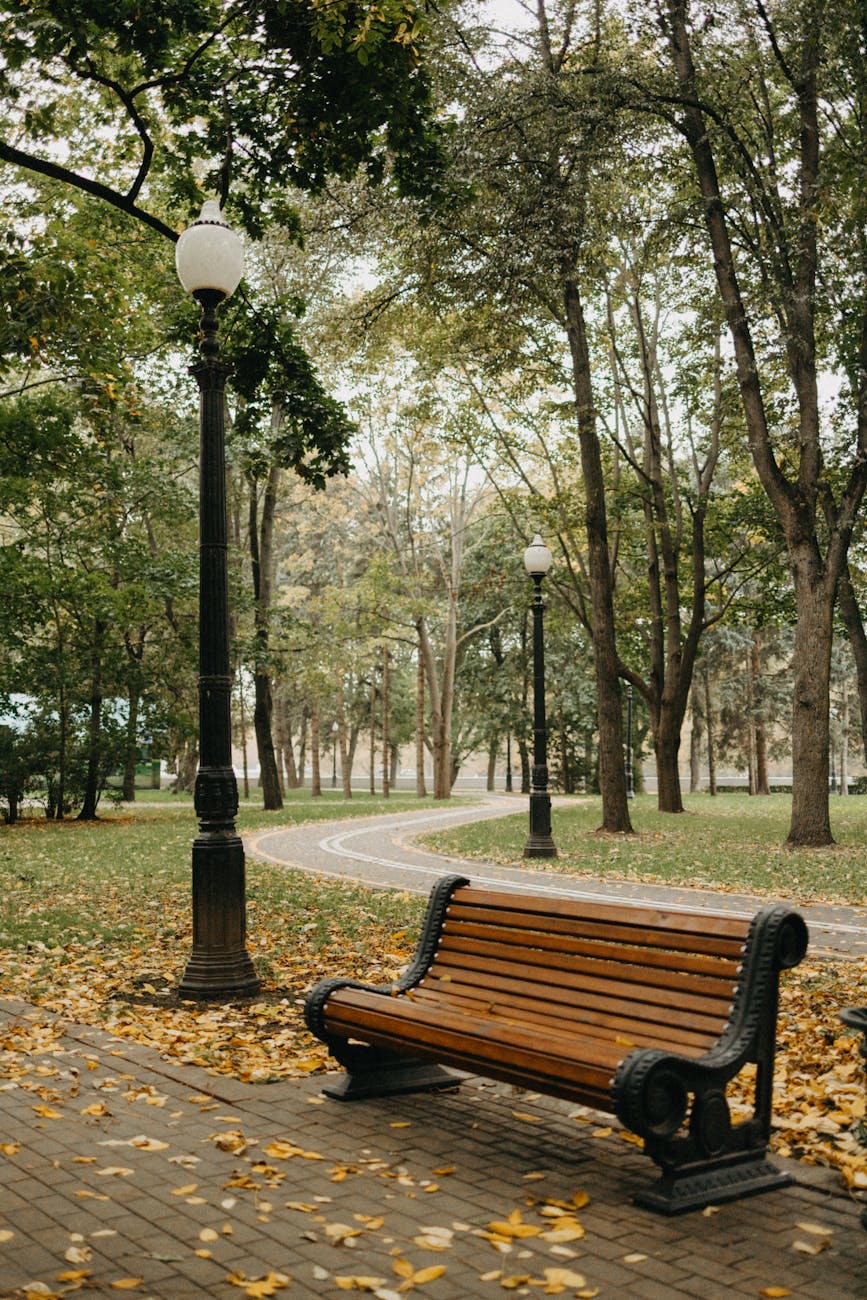
As the air cools and the days shorten, nature invites us into a season of reflection. Fall has always been a time of harvesting what we’ve planted- literally and figuratively. It’s a natural checkpoint between the full bloom of summer and the quiet rests of winter.
Just as trees let go of their leaves, we, too, are called to release what no longer nourishes us. This may show up emotionally as a need for rest, nostalgia for what’s passed, or a sense of reevaluating what really matters. These shifts aren’t signs of stagnation- they’re signs of alignment.
Fall teaches us that change doesn’t always mean loss. Sometimes it means integration- the merging of lessons leaned into wisdom we carry forward. When we pause to reflect, we often find gratitude tucked inside the simplest moments: the comfort of a sweater, the scent of cinnamon, or the calm of a quiet evening.
Try this gentle reflection ritual this week:
Brew a warm drink you love.
Write down 3 things from this past year that have “ripened” for you- things that you’ve worked toward, learned, or outgrown.
Then, write one thing you’re ready to release before winter. Burn or bury that note as a symbol of letting go.
As the season unfolds, may you honor both your harvest and your heart. Remember- just like the trees, you are allowed to change and still be beautiful.
Join the Journey
If this message resonated with you, I invite you to continue exploring your own cycles of growth and healing with me.
Visit Mystic Harmony Circle– our sacred online space for soulful connection, gentle guidance, and spiritual practice. And if you enjoy reflective conversations and rituals like this one, you’ll love our Mystic Harmony YouTube Channels (Main & Shorts), where I share guided meditations, energy wisdom, and intuitive tools for everyday life.
Wherever you are on your path, may you find balance, beauty, and harmony in every season.
As we move into the quieting days of autumn, the skies welcome the New Moon in October — traditionally called the Beaver Moon. This year, it begins on October 21, 2025, marking the perfect time for reflection, planning, and intentional living.
Why “Beaver Moon”?
The name “Beaver Moon” dates back to early North American traditions. Indigenous communities and European settlers alike used this term to signal the time when beavers prepared for the winter by building and repairing their lodges. It was also a time when people laid in supplies and prepared for the colder season ahead. Symbolically, it’s about preparation, resourcefulness, and building foundations for the future.
The Power of the New Moon
New Moons invite us into beginnings, fresh starts, and seed planting. Unlike the illumination of the full moon, this lunar phase is about quiet intention, rest, and creating space. The Beaver Moon’s energy encourages us to consider what we’re preparing for, not just in our homes but also in our relationships, work, and inner lives.
This is an ideal moment to:
• Clear physical clutter to welcome fresh energy.
• Reassess what is truly necessary and let go of distractions.
• Strengthen connections with those around you through mindful communication.
• Align your goals with your authentic self.
Ritual Recitation
To work with this Beaver Moon New Moon, try this simple practice:
1. Find a quiet place in your home where you feel safe and at peace.
2. Light a candle, close your eyes, and breathe deeply.
3. Speak aloud the following words, letting them resonate in your heart:
✨ “I am clearing space in my home, my mind, and my spirit for positive changes.
I balance things I want and need, with those of others effortlessly.
My relationships are stronger because we communicate better every day.
I am working toward harmony in every step I take, while also living my authentic self.
Opportunities abound but my intuition pulls me toward the ones that are right for me in this season.”
Repeat this recitation as often as needed during this lunar cycle to anchor your intentions.
Closing Thoughts
The Beaver Moon teaches us that preparation is power. By honoring this New Moon, you align with nature’s rhythm of balance, harmony, and readiness. Allow this lunar energy to guide you toward building strong foundations for the months ahead.
On October 6, 2025, we’ll witness the Full Harvest Moon—a luminous full moon that carries both tradition and potent spiritual energy. This year, the Harvest Moon lands in Aries, bringing a dynamic mix of harvest, initiation, release, and bold new beginnings. In this post, we’ll journey through the history and symbolism of the Harvest Moon, unpack its astrological dynamics, and offer a short ritual you can do at home to work with its magic.
History & Symbolism of the Harvest Moon
What is the Harvest Moon?
The term “Harvest Moon” refers to the full moon that falls closest to the autumnal equinox. In many years it occurs in September; in some years—like 2025—it shifts into early October.
Historically, this moon was a boon to agrarian societies: because its rising time is unusually close to sunset for a few nights in a row, it casts extra early-evening light, allowing farmers to continue harvesting crops after dusk.
In folklore and spiritual traditions, the Harvest Moon is woven into themes of:
• Abundance & Gratitude: It signals the culmination of what you’ve sown and tended.
• Gathering & Culmination: It is a time to gather your “harvests” — whether material, emotional, relational, or energetic.
• Release & Transition: As the year tips closer to winter, it invites letting go of what no longer serves.
• Balance of Light & Shadow: With days and nights shifting more evenly, the Harvest Moon resonates with the balance of dark and light, growth and rest.
Cultures around the world celebrate moon-related harvest festivals. For example:
• In China, the Mid-Autumn Festival (Moon Festival) is centered on the full moon in autumn and the harvest.
• In Japan, the tradition of Tsukimi (moon-viewing) involves offerings of seasonal foods and grasses to honor the moon.
These cultural observances echo the timeless human impulse to pause in awe of lunar light, gratitude, and seasonal cycles.
Astrology of the October 6, 2025 Harvest Moon
Sun, Moon & Zodiac Placements
In 2025, the full moon peaks on October 6 at 14° Aries (Eastern Time) while the Sun resides in Libra.
Thus, the lunation occurs along the Aries–Libra axis, a polarity of self / identity / initiative (Aries) opposite relationship, harmony, balance, and others (Libra).
Key Astrological Dynamics & Themes
Here are some of the notable energetic threads in play:
ThemeInterpretation / Guidance
Ego, impulse & self-assertion Aries energy empowers courage, initiative, and the drive to act. This can stir bold moves or abrupt shifts. Yet the square to Jupiter may exaggerate confidence, risking overextension.
Balance & relationship With the Sun in Libra, relational harmony is highlighted. The pull to act (Aries) may clash with diplomacy, compromise, or considering others.
Power & communication Mercury forms a square with Pluto, which suggests potential friction in conversations or interactions—avoid force or control in communication.
Blessings & challenge in love Venus is making a favorable sextile to Jupiter (supporting grace, beauty, expansion), but is opposed to both Saturn and Neptune—suggesting tensions between idealism, boundaries, and realism in relationships.
Focused energy Mars, the ruler of Aries, is relatively unengaged, which can create fewer distractions and allow more inner clarity and direction.
Long-term growth Jupiter trines Saturn during this period, offering grounded expansion and perseverance in long-term goals.
Deep societal & spiritual shifts Outer planets (Saturn, Neptune, Uranus, Pluto) are in harmonic aspects, suggesting unseen spiritual or structural transformations in culture.
What This Means for You
• What to release: Inflated expectations, overcommitments, relationships or roles built on imbalance or illusion.
• What to claim: Your authentic voice, the next “step forward,” seed ideas you’ve held quietly, courage to initiate with integrity.
• Where to watch: How your desire intersects with partnership, the tension between “me / us,” and when your impulse to act may outpace discernment.
• Supportive practices: Grounding, meditation, pause before speaking, small acts of bravery, journaling to distinguish ego from deeper intention.
A Mini Ritual You Can Do at Home
This is a simple 5–10 minute ritual to align with the Harvest Moon energy — gathering, releasing, and opening to new life. You don’t need elaborate tools; use what you have.
What you’ll need (optional but helpful):
A sheet of paper or journal
A pen
A small bowl or dish
A white or silver candle (or any candle)
A quiet window or outdoor spot where you can see the moonlight
Step-by-Step Ritual
1. Set your space & intention
Find a calm corner or spot near a window or outdoors where the moonlight is visible. Place your candle, paper, and pen. Quiet your mind with a few deep breaths.
2. Light the candle
As you light it, say (quietly or in your mind):
“I call in the light of the Harvest Moon, to kindle clarity, gratitude, and release.”
3. Harvest reflection
On your paper, write down 3–5 things you are grateful for — these can be tangible, relational, internal, or spiritual. Then write 1–2 things you are ready to let go of (habits, mindsets, relationships, burdens).
4. Release
Fold or crumble the part of the paper with what you’re letting go and place or drop it into your bowl or dish (or even gently burn a corner if safe to do so). As you do, say:
“I release what no longer serves. May clarity and ease emerge.”
5. Affirmation / Claim
On the remaining portion (gratitude / blessings side), read it out or silently affirm:
“May I receive the harvest of my efforts. May I walk forward with integrity, clarity, and courage.”
6. Moon gaze & gratitude
Take a few moments to gaze at the moon (or imagine her light). Breathe deeply. Absorb her calm illumination. If you feel inspired, whisper a word, intention, or gratitude into the moon’s light.
7. Close
When you feel complete, gently extinguish the candle (or allow it to burn safely). Keep the gratitude portion of the paper somewhere you can revisit it, as a reminder of your harvest and blessings.
You can do this ritual anytime during the day or evening of October 6–7, but performing it under the moon’s glow amplifies its resonance.
Closing Thoughts
The Harvest Moon is more than just a poetic name for a full moon—it’s a cosmic moment inviting us to pause, gather, shift, and claim. In 2025, with its energy in Aries, this lunation awakens our inner pioneer, asking us: What is ready to be harvested? What next action is lit from within?
May this moon’s light help you see clearly, release gracefully, and step forward with a grounded, radiant heart.
⸻
References & Further Reading
Farmers’ Almanac — Full Harvest Moon & astrology of October 2025
Spells8 — Harvest Full Moon ritual ideas
Pagan Grimoire — October full moon spiritual meaning & rituals
California Psychics — Spiritual meaning of the Harvest Moon
Almanac.com — explanation of Harvest Moon timing and tradition
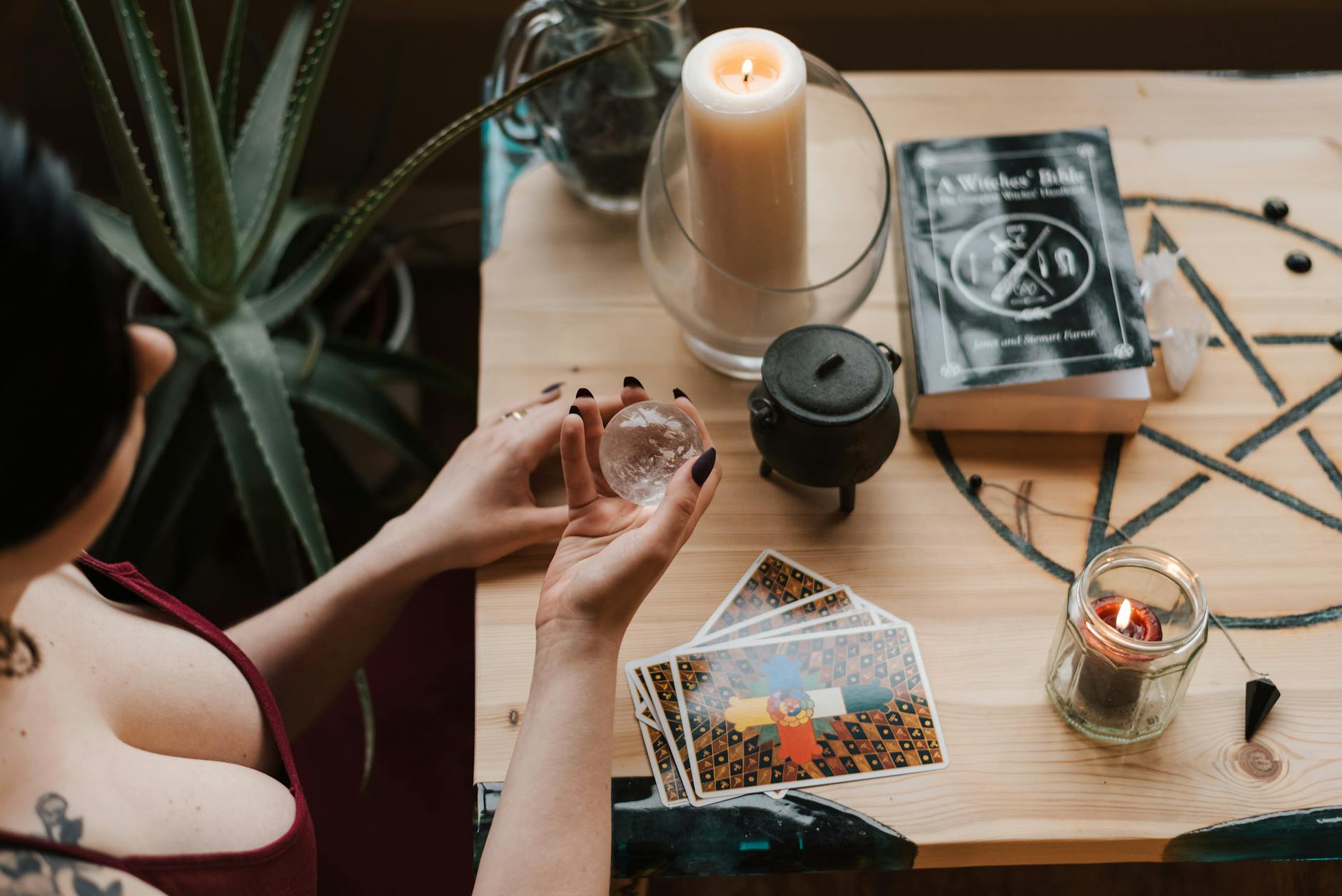
In recent years, there’s been a noticeable rise in the popularity of witchcraft practices—tarot reading, spellcasting, moon rituals, and ancestral connection. What might feel like a “sudden” resurgence is, in truth, part of a historical rhythm: when traditional systems falter, people turn toward spiritual practices that offer meaning, empowerment, and community.
A Pattern Across Time
Throughout history, whenever societies faced upheaval—wars, political unrest, economic collapse—people often turned to alternative systems of wisdom. Ronald Hutton, in The Triumph of the Moon (1999), shows how modern Pagan witchcraft re-emerged in the 20th century during times of cultural upheaval. Similarly, sociologist Boris Gershman found in his study of witchcraft beliefs across 95 countries that such practices are most common in areas where institutional trust is weak and communities turn inward for resilience (PNAS Nexus, 2022).
We are living through a similar cycle now. Climate change, systemic inequality, and the breakdown of traditional institutions have left many searching for new anchors of safety. Witchcraft, tarot, and energy work offer not just answers, but also agency in uncertain times.
Inner and Ancestral Knowledge
For many, this revival isn’t about “trendiness” at all—it’s about reconnecting with generational knowledge. Silvia Federici reminds us in Witches, Witch-Hunting, and Women (2018) that these practices often preserved knowledge about healing, herbs, and resistance during periods of systemic control. Rediscovering them today can feel like reclaiming a birthright.
Tarot cards, for example, aren’t just tools for fortune-telling; they serve as mirrors for self-reflection, inviting people to look inward when the outside world feels unstable. (If you’d like to explore this further, check out my post on How Intuition, Self-Confidence & Happiness Work Together.)
Building New Communities
One of the most beautiful aspects of this resurgence is the creation of supportive spiritual communities. From online circles to neighborhood covens, people are forming networks that prioritize healing, empowerment, and shared wisdom. As anthropologist Susan Greenwood notes in Magic, Witchcraft and the Otherworld (2000), ritual and magic often serve as tools of belonging and identity, especially when mainstream structures feel alienating.
These spaces often feel safer and more authentic than traditional institutions because they center lived experience, intuition, and mutual respect.
Why It Matters Now
The return of witchcraft practices is not simply about casting spells or drawing cards—it’s a cultural reawakening. It reminds us that humans have always turned to both the mystical and the practical in times of uncertainty. By reconnecting with these traditions, we’re not just seeking guidance; we’re building resilience, reclaiming power, and finding each other again.
✨ Whether you’re just curious about tarot or deep in your spiritual practice, this resurgence is an invitation: to explore your inner wisdom, connect with your roots, and participate in a movement that blends the ancient with the modern.
👉 Curious to explore tarot and witchcraft practices more deeply? Join the free Mystic Harmony Circle community on Skool, where we share ancestral wisdom, rituals, and spiritual support in a safe and empowering space.
When we imagine personal growth, we often picture transformation as radiant and uplifting—like a seed sprouting into the sun or a butterfly emerging from its cocoon. But the truth is, spiritual growthand self-discovery are not always glamorous. Sometimes, the path of inner transformation feels deeply lonely.
True growth requires us to step outside of what is familiar. It means releasing old versions of ourselves, outdated beliefs, and even relationships that no longer align with our higher purpose. This shedding process can leave us feeling like we’re standing in an empty space—caught between the comfort of the old and the uncertainty of the new.
That in-between space is where loneliness often shows up. But rather than seeing it as a void, we can view it as sacred spaciousness—a pause that allows us to hear our intuition more clearly. Just as a seed rests in darkness before breaking through the soil, our personal transformation sometimes asks us to sit in stillness before we blossom.
This “lonely” stage of growth can be one of the most powerful. It invites us to practice mindfulness, listen deeply to our inner wisdom, and reconnect with the Divine. The silence and solitude become fertile ground for clarity, healing, and spiritual awakening.
It’s also important to remember that growth naturally shifts our connections. As we evolve, we attract new relationships, communities, and opportunities that match the vibration of who we are becoming. The people who are meant to walk with us will find us, and the loneliness we once felt gives way to a deeper sense of belonging and alignment.
If you’re moving through a season where growth feels lonely, take heart. You’re not lost—you’re in transition. You’re creating space for joy, alignment, and new beginnings. Trust that this stage is part of your spiritual journey, and that on the other side of the loneliness lies the light of your authentic self.
Growth is sometimes lonely—but it is also the gateway to lasting happiness, fulfillment, and spiritual connection.
⸻
✨ If this reflection resonates with you, consider joining the Mystic Harmony Circle, a feee Skool community, where we share insights, meditations, and tools to support your spiritual journey and inner peace.